
Sixty Years in the Making: A Conversation with Willard and Sharon Friesen
For Willard and Sharon Friesen, farming was never just a job. It was a way of life—and one they shared for nearly six decades.
Willard started farming in 1964, renting 220 acres just a few miles from Mountain Lake. Over the years, the operation grew slowly and steadily. He eventually purchased some of that original ground, added more acres, and built a farm that would eventually encompass more than 700 acres of owned land and more than 1,500 acres farmed. Sharon joined the story in 1976. The two actually met at a Watonwan Farm Service annual meeting, where Sharon was working in bookkeeping.
“I thought he was younger than me, so I didn't know if I wanted to go with him,” Sharon laughed. “I got my courage up and asked him how old he was, and we were exactly the same age.”
The rest, as they say, is history.
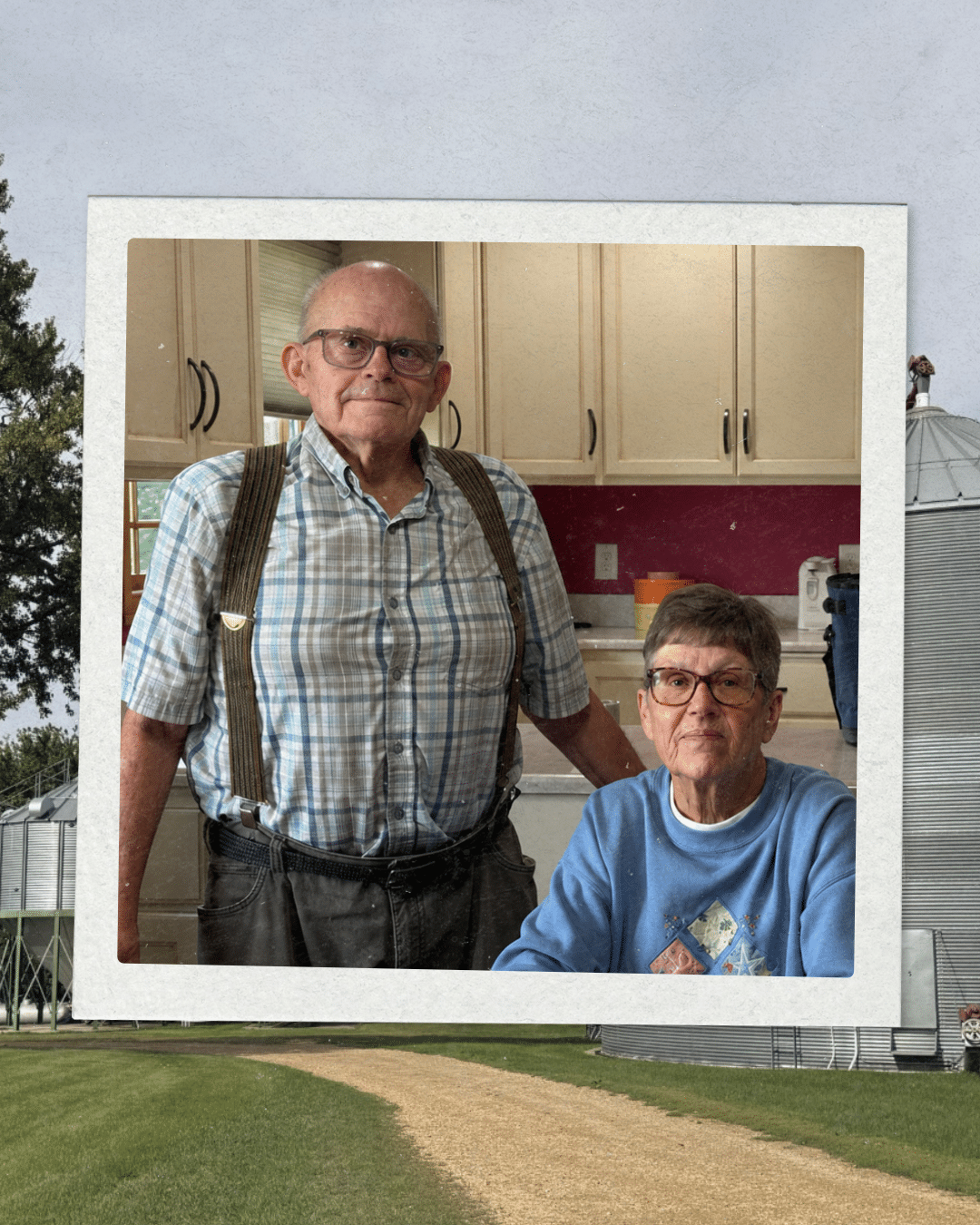
The Friesens married in 1976 and moved to their farm in 1978, just before their daughter, Carly, was born. From there, they built their farm and their life together. For most of their farming career, it was truly a two-person operation. Willard and Sharon handled nearly everything themselves, from planting and harvesting to rock picking and grain marketing. They eventually hired some help, particularly during the last 15 years, but for much of their 60 crop years, it was simply the two of them.
And there were plenty of lessons learned along the way. There were droughts, hail, wet springs and falls, and plenty of years when the weather didn't exactly cooperate. One of the most memorable came in 1991, when the Friesens finished harvest just one day before the Halloween blizzard that dumped more than two feet of snow.
“I was going to go out and do tillage that morning,” Willard recalled. “But I thought, you know what? They're predicting a blizzard. We better get the machinery put away.”
They did—and it turned out to be a very good decision.
“We were really glad that we got everything in the bin,” Sharon said.
That kind of decision-making became part of farming life: watching the weather, knowing when to push and when to wait, and sometimes giving up a football game or other plans because there was work to be done. One Thanksgiving, that meant combining corn while everyone else was sitting down to turkey. “We ate bologna sandwiches,” Sharon recalled.
“We were never the first ones done,” Willard joked, “We were always about the last.”
But they got it done.
KEEPING UP WITH CHANGE
Over 60 years, the Friesens also watched farming change dramatically. Technology and machinery grew bigger and more sophisticated, and they embraced those changes rather than fighting them.
“There’s no use fighting it,” Willard said. “You might as well keep up if you can. Otherwise, you'll fall behind.”
Tracks on their equipment became a particularly welcome improvement, helping them keep moving when conditions were wet. They also kept up with advancements in seed, planting equipment, chemicals and other technology throughout their career. And after six decades of farming, Willard still remembers the details. Sharon joked that he can tell you what he planted 20 years ago—and what the numbers were.
When asked what he was most proud of, Willard didn't hesitate. “Getting all my land pattern tiled,” he said. The drainage made a tremendous difference, especially on some of the wetter ground they farmed.
They also took pride in keeping their machinery in good shape. That investment paid off in an unexpected way when they held their farm sale in August. The equipment brought in better prices than they anticipated, making for a pleasant surprise after so many years of taking care of it.
CO-OP CONNECTION
New Vision has been part of the Friesens' farming story for many years. Willard remembers relying on the co-op for fertilizer, chemical and seed, especially during the busiest parts of the season.
“If I called a couple days ahead of time, they were always there in the spring,” he said.
Over the years, a large share of the Friesens' fertilizer and seed business came through New Vision. But Willard's relationship with the co-op went beyond being a customer.
He served on the New Vision board of directors from 1998 to 2010.
“I really enjoyed it,” Willard said.
Those 12 years gave him a different perspective on the cooperative and the business side of agriculture. He remembers the board members getting along well, becoming good friends and working together to make decisions.
“One of the most important things was that our board was always close,” he said. “If we made a decision and one guy thought maybe we shouldn't, and the rest thought we should, he wasn't going to argue. He'd say, ‘Well, if you guys think that way, I do too.’”
During his time on the board, the cooperative was also going through significant growth and change, including the merger with Prairieland and Consolidated Co-op, the building of the fertilizer shed in Brewster, and the early stages of the Magnolia feed mill. Looking back, Willard considers being on the board an excellent experience.
“You learned a lot being on the board,” he said. “You saw the other side of the business.”
CALLING IT A DAY
After 60 crop years, retirement wasn't necessarily an easy decision. The Friesens still enjoyed farming. In fact, they had just finished what Willard considers the best crop they ever raised. They harvested about 265 bushels of corn per acre on the home farm and had excellent soybean yields as well. It was a pretty good way to end a 60-year career.
But eventually, age began to make some of the less glamorous parts of farming harder.
“We could still do it, but it took longer,” Willard said.
Getting machinery ready, climbing in and out of equipment and handling some of the heavier jobs became more difficult. Things that Willard could once do himself sometimes required both of them working together. So, little by little, they slowed down. Their final harvest came in 2025, ending a six-decade run on the farm.
And while they're ready for a little more free time, they're not quite ready to completely leave agriculture behind. Willard rented his land to a neighbor, who has already asked him to help with some tillage.
“He always enjoyed that anyway,” Sharon said.
There is just one small adjustment he'll have to make: after years of farming with red equipment, he's now going to have to climb into a few green tractors. “That’s going to be a bit of a challenge,” Sharon joked.
The two are also looking forward to traveling more, spending time with their daughter and son-in-law in Portland, Oregon, and making a few more trips to Branson, Missouri, where they enjoy the music.
Mostly, though, they're looking forward to slowing down. They know they'll miss farming. They already do. “We really didn't want to quit either,” Sharon said. “We miss it.”
Still, after 60 years, they feel incredibly fortunate to have had the opportunity.
“We were very fortunate to be able to farm as long as we did,” Willard said.
And perhaps that's the best way to sum up the Friesens' story. Sixty years of crops, weather, machinery, long days, good years, difficult years, neighbors, community and plenty of hard work—all shared between two people who wouldn't have chosen to do it any other way.
When asked if they would make the same choice again, their answer was simple.
“It was a good decision,” Willard said. “I can't think of anything else we would have rather done.”
Sharon agreed.
“It was a good livelihood,” she said. “And it's a good place to raise a family.”
After six decades, that's a pretty good harvest to look back on.